EN
EN

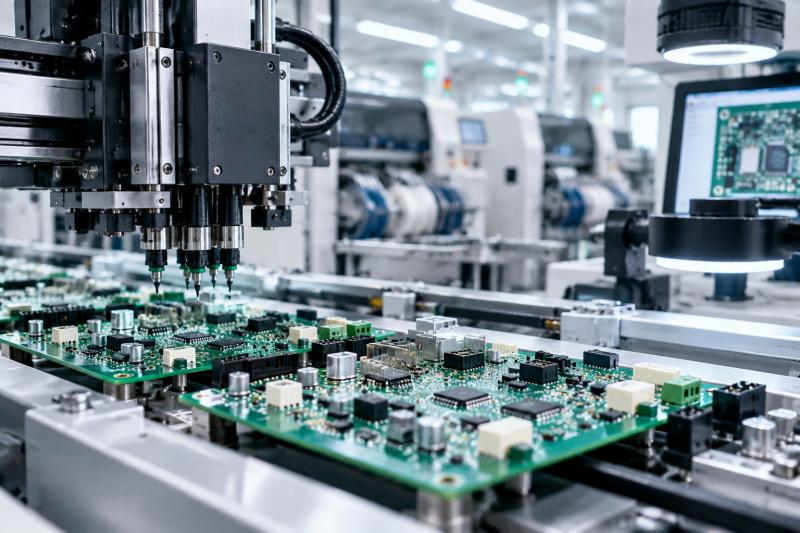
Low-volume high-mix electronics manufacturing requires a partner with strong engineering control, flexible production systems, and disciplined supply chain management. The right electronics contract manufacturing partner can reduce production risk, control total cost, and provide a reliable path from prototype builds to scalable production.
For OEMs developing industrial equipment, medical devices, communication systems, and specialized electronics, the challenge is not simply producing a small quantity of boards. It is managing frequent product variations, engineering changes, component availability, testing requirements, and quality consistency across multiple SKUs.
Low-volume high-mix manufacturing requires flexible processes, experienced engineering teams, and traceable production controls. Manufacturers must quickly adapt to different PCB designs, assembly requirements, and product revisions while maintaining consistent quality and delivery performance.
Low-volume high-mix electronics contract manufacturing requires a production partner with advanced NPI capability, flexible SMT assembly, strong quality systems, and accurate traceability. Unlike high-volume production, success depends on managing frequent changeovers, engineering updates, mixed materials, and complex testing requirements while maintaining cost efficiency and reliable delivery.
Outsourcing is often the better option when product demand is unpredictable, production volumes are limited, or internal manufacturing resources cannot support multiple product variations.
A qualified electronic manufacturing services provider can provide:
SMT and through-hole assembly capacity
Manufacturing engineering support
Supplier management expertise
Automated optical inspection (AOI) and testing capability
Flexible labor allocation for mixed production schedules
For companies launching new products, outsourcing also reduces capital investment in equipment, production space, and specialized manufacturing personnel.
High-mix manufacturing creates operational complexity because production lines must frequently switch between different assemblies, components, and process requirements.
Every product change requires careful preparation. SMT machines need new feeder configurations, operators need updated instructions, and production teams must verify tooling and programming before starting a new batch.
An experienced contract electronic manufacturing partner minimizes downtime through standardized setup procedures, digital work instructions, and optimized production scheduling.
Low-volume products often experience frequent engineering updates during development and early production stages.
Effective revision control ensures:
Correct BOM usage
Accurate PCB revision tracking
Controlled firmware and software versions
Prevention of obsolete component usage
Without strict document control, even a small revision mistake can create costly rework or field failures.
High-mix projects require careful inventory planning because components may be shared across several products while others are unique to specific assemblies.
Manufacturers must manage:
Common components across product families
Long-lead semiconductor parts
Alternative approved components
Inventory allocation priorities
Strong supply chain coordination directly impacts production continuity.
Comparing manufacturers based only on assembly price can lead to incorrect decisions. The total manufacturing cost includes engineering support, inventory risk, production efficiency, and quality performance.
Non-recurring engineering (NRE) costs may include:
SMT programming
Stencil fabrication
Test fixture development
Process validation
Manufacturing documentation preparation
A supplier with higher upfront engineering capability may reduce long-term production costs by preventing repeated quality issues.
Low-volume products often face challenges with minimum order quantities (MOQ).
Buying excessive components to achieve price breaks can create:
Excess inventory
Obsolescence risk
Increased storage costs
A capable manufacturing partner helps balance component pricing with actual demand.
Frequent product switching can increase labor and production costs. Rush orders may also create additional expenses through expedited materials and priority scheduling.
Efficient production planning reduces these hidden costs.
Choosing the right supplier requires evaluating more than equipment lists or quoted unit prices.
Strong NPI support helps identify manufacturing risks before production begins.
Key evaluation points include:
PCB design feedback speed
DFM recommendations
BOM risk analysis
Prototype build support
A responsive electronic manufacturing services provider should work as an extension of the OEM engineering team.
Traceability is essential for industries requiring high reliability.
A qualified supplier should provide:
Lot tracking
Component traceability
Production history records
Inspection data retention
These records support faster root cause analysis and corrective actions.
Many OEMs need more than PCB assembly. A complete manufacturing solution may include:
PCBA production
Cable assembly
Mechanical integration
Functional testing
Final product packaging
A supplier capable of supporting multiple production stages simplifies vendor management.
A structured manufacturing workflow reduces risk when moving from prototype to production.
The initial stages focus on:
BOM and Gerber review
Manufacturing feasibility analysis
Component availability assessment
Prototype assembly validation
DFM feedback at this stage prevents expensive production problems later.
The scale-up process typically includes:
Gate 3: Pilot production
Confirm assembly processes
Validate testing procedures
Measure first-pass yield
Gate 4: Corrective improvement
Resolve process issues
Optimize production parameters
Update documentation
Gate 5: Volume release
Establish stable production flow
Monitor quality performance
Maintain continuous improvement
This approach allows manufacturers and OEMs to scale confidently without sacrificing quality.
Before selecting a supplier, buyers should review objective quality evidence, including:
ISO-certified quality systems
Inspection procedures
AOI and X-ray capability
Functional test methods
First article inspection reports
Production traceability examples
Corrective action records
Quality performance should be demonstrated through documented processes rather than promises.
A reliable quotation requires complete manufacturing data, including:
Bill of Materials (BOM)
PCB Gerber files
Assembly drawings
Pick-and-place files
Test requirements
Expected annual volume
Production schedule
Packaging requirements
Regulatory requirements
Incomplete information often results in inaccurate pricing and unexpected engineering changes.
Low volume usually refers to production ranging from a few units to several thousand units annually, depending on product complexity and industry requirements.
Professional electronics contract manufacturing providers use revision control systems, ECO processes, and approved documentation workflows to prevent production errors.
Yes. Many experienced electronic manufacturing services provider companies support PCBA, testing, box build, and final product integration.
Compare total cost, engineering capability, quality systems, lead time, flexibility, and supply chain support—not only the unit price.