EN
EN

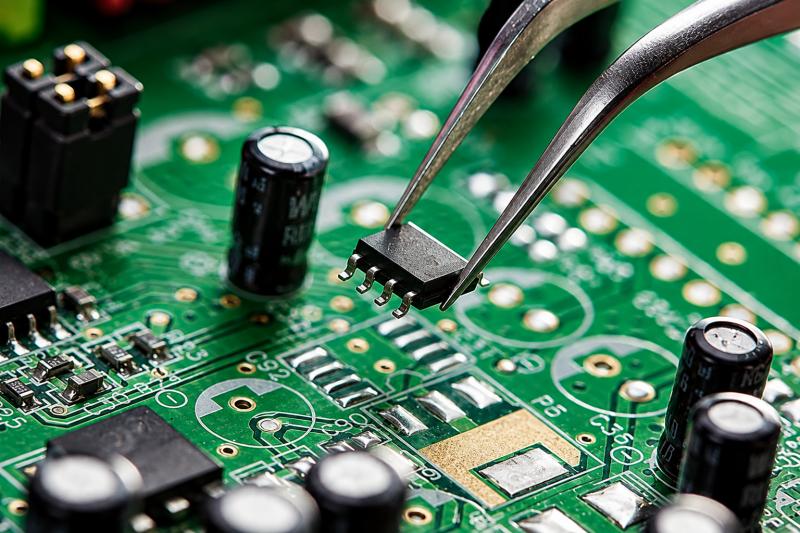
A reliable PCB assembly manufacturer should do more than offer a competitive unit price. The right supplier must be able to prove its manufacturing capability, component sourcing controls, quality management, testing process, traceability, and ability to support your product from prototype through repeat production.
For buyers sourcing in China, the most effective approach is to evaluate the manufacturer as a long-term electronics manufacturing partner rather than simply comparing quotations. A slightly higher assembly price can be far less expensive than component substitutions, unstable yields, field failures, or production delays later.
Start by checking whether the supplier's actual production capability matches your board rather than relying on a general capability list.
For a typical project, evaluate these areas:
SMT, through-hole, or mixed-technology assembly capability
Minimum component size and fine-pitch capability
BGA, QFN, LGA, POP, and other difficult package experience
Prototype, low-volume, and volume production capacity
PCB fabrication and component procurement capability
SPI, AOI, X-ray, ICT, and functional testing options
Conformal coating, programming, cable assembly, and box-build requirements
Engineering support for DFM, DFT, and BOM review
Production traceability and change-control procedures
A manufacturer that is excellent at simple consumer electronics may not necessarily be the right choice for a high-density industrial controller or a board containing fine-pitch BGAs.
The first question should therefore be: Has this factory successfully manufactured products with requirements similar to mine?
ISO 9001 is a useful baseline because it indicates that the supplier operates under a documented quality management system. However, certification alone does not guarantee that your assemblies will meet your requirements.
Depending on the application, buyers may also need to evaluate standards or systems such as:
IPC workmanship and acceptance requirements, including IPC-A-610
ISO 13485 for applicable medical-device manufacturing
IATF 16949 for applicable automotive supply chains
RoHS and REACH requirements
Customer-specific traceability and process-control requirements
More importantly, verify that the quality system is actually reflected on the production floor.
Ask how nonconforming materials are controlled, how engineering changes are approved, how rework is documented, and whether production records can be traced back to individual lots or batches.
Do not evaluate quality only by looking at a finished sample.
A strong PCB assembly manufacturer controls quality throughout the process.
For SMT assembly, this may include solder paste inspection before placement, process-controlled reflow, AOI after soldering, and X-ray inspection for hidden solder joints such as BGA packages. Electrical or functional testing should then be selected according to the product's failure risks.
For example, AOI is highly effective for checking component placement and visible soldering defects, but it cannot fully evaluate hidden BGA joints or confirm whether the finished circuit actually functions correctly.
A good supplier should be able to explain:
What is being tested, at which production stage, using which acceptance criteria, and what happens when a failure is detected?
Before moving to volume production, consider placing a prototype or first-article order using the same BOM, PCB specifications, assembly process, and testing requirements planned for production.
GreenStone, for example, describes a quality-control process incorporating incoming inspection, SPI, AOI, first-sample confirmation, X-ray inspection, and additional testing according to project requirements.
Component sourcing is one of the most underestimated risks in China electronic manufacturing.
The lowest BOM quotation should not automatically win.
Ask the supplier:
Where will critical ICs and semiconductors be purchased?
Are authorized distributors or customer-approved suppliers used?
Will manufacturer part numbers remain unchanged without written approval?
How are date codes and incoming materials inspected?
What is the process when a specified component becomes unavailable?
Are alternative parts approved before purchasing?
A professional contract PCB assembly supplier should never change a component simply because another part is cheaper or easier to purchase.
For long-life industrial products, component lifecycle management is equally important. An experienced EMS partner should identify obsolete, end-of-life, or long-lead-time parts during BOM review rather than discovering the problem after the purchase order has been released.
It depends on your supply-chain strategy.
With consigned assembly, you purchase and supply most or all components to the assembler. This gives your purchasing team greater direct control but also increases logistics and inventory management.
With turnkey assembly, the manufacturer manages PCB fabrication, component procurement, assembly, and usually testing.
For many overseas buyers, a qualified turnkey PCB assembly service China supplier can reduce administrative work and eliminate coordination between multiple vendors.
Turnkey manufacturing is especially useful when you need:
One supplier responsible for the complete PCBA
Faster prototype-to-production transfer
Centralized component sourcing
Lower internal procurement workload
Integrated testing and final assembly
However, turnkey only works well when the manufacturer has strong purchasing controls and transparent component sourcing.
Never compare suppliers using the final price alone.
Make sure every quotation covers the same scope, including:
PCB fabrication, component cost, component attrition, stencil charges, SMT assembly, THT assembly, programming, testing, conformal coating, tooling, packaging, and any non-recurring engineering charges.
Also review lead-time assumptions carefully.
A quote based on substitute components or different testing coverage cannot be meaningfully compared with another supplier's full-turnkey quotation.
The best suppliers will also identify technical questions during RFQ review. A manufacturer that detects BOM inconsistencies, polarity questions, package conflicts, unclear assembly drawings, or manufacturability issues before production is providing engineering value—not creating unnecessary delays.
Be cautious when a supplier:
Provides an unusually low price without explaining the cost structure
Cannot clearly explain component sourcing channels
Makes component substitutions without written approval
Has limited inspection beyond visual checking
Avoids detailed technical questions during quotation
Cannot provide clear production or quality records
Gives vague answers about BGA inspection or functional testing
Has poor engineering communication during the prototype stage
Cannot explain how a prototype will be transferred into volume production
Communication quality during RFQ is often a good indication of what will happen after the order is placed.
If engineering questions already take several days to resolve before payment, communication is unlikely to improve once production becomes urgent.
China remains attractive for PCB assembly because its electronics manufacturing ecosystem combines PCB fabrication, component supply chains, SMT production, mechanical manufacturing, and final product assembly within a highly developed manufacturing infrastructure.
The advantage, however, comes from selecting the right partner.
A qualified PCB assembly manufacturer should help reduce manufacturing risk through engineering review, controlled sourcing, stable production processes, appropriate inspection, and transparent communication.
Before committing to volume production, verify the supplier's capabilities against your actual product requirements and use a prototype or first-article build to validate the process.
Choosing a reliable China PCB assembly manufacturer requires evaluating much more than price and lead time.
Focus on technical capability, quality systems, component sourcing, inspection and testing, engineering support, communication, and scalability. Request a detailed quotation, clarify the testing plan, verify how critical components will be sourced, and validate the supplier with an initial production build before increasing volume.
For projects requiring PCB fabrication, component procurement, SMT/THT assembly, testing, and additional contract manufacturing services, GreensTone provides integrated PCB assembly and electronics manufacturing support from prototype through production.
The cost depends on board complexity, quantity, component pricing, SMT/THT processing, testing requirements, and additional services. For an accurate comparison, send the same Gerber files, BOM, assembly documentation, quantity, and testing requirements to each supplier.
Most manufacturers require Gerber files, a BOM, placement or centroid files, production quantity, and assembly requirements. Drawings, test procedures, firmware, and special process instructions may also be required for more complex projects.
Lead time depends heavily on component availability and board complexity. Assembly itself may be relatively fast, while long-lead or unavailable components can significantly extend the overall schedule. Ask suppliers to separate component procurement lead time from manufacturing lead time.
Yes. Many manufacturers support prototypes, engineering builds, and low-volume production. The important consideration is whether the same supplier also has a controlled process for transferring your validated prototype into repeat production.
Review its quality system, equipment, sourcing procedures, testing capability, engineering response, traceability, and experience with products similar to yours. Then verify those claims through a prototype or first-article build before committing to larger production quantities.