EN
EN

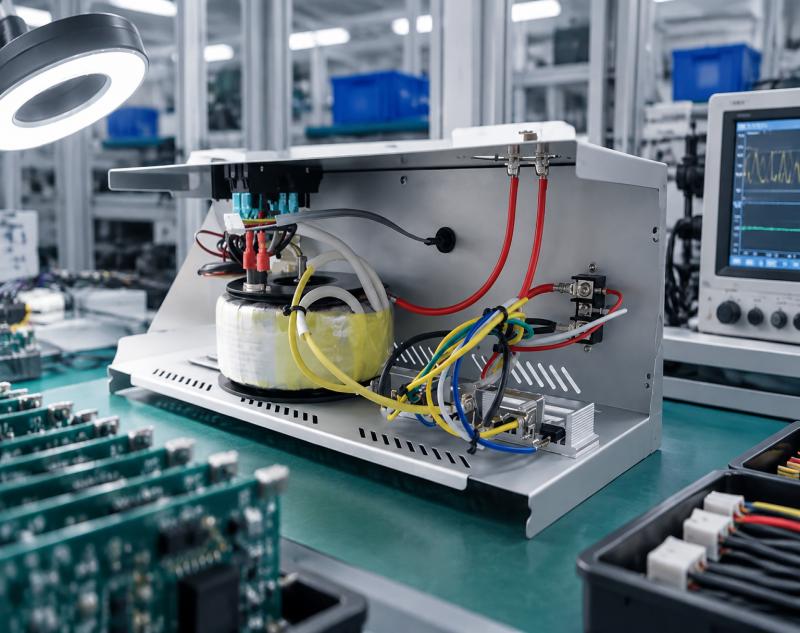
A reliable box build printed circuit board assembly services provider should control the complete product integration process, from engineering review and incoming material inspection to mechanical assembly, electrical testing, firmware programming, and final product release.
For OEMs, box build quality is not determined only by PCB assembly performance. A finished electronic product depends on the interaction between PCBA, cables, connectors, enclosures, mechanical parts, software, and functional testing. A structured quality control checklist helps manufacturers identify risks early, maintain consistency across production batches, and support reliable product delivery.
A box build quality control plan should cover documentation control, incoming inspection, mechanical assembly verification, electrical integration checks, firmware programming, functional testing, final inspection, and production traceability.
A professional pcb box build assembly services provider should establish quality checkpoints throughout the entire manufacturing workflow, including:
BOM, drawing, and revision verification
Engineering document control
Incoming component inspection
Approved supplier and material verification
Enclosure and mechanical part inspection
Cable and harness inspection
Label and marking verification
Mechanical fit and alignment inspection
Fastener and torque control
Cable routing and strain relief inspection
Grounding and shielding verification
PCBA and connector integration checks
Electrical continuity and polarity testing
Firmware programming verification
Serial number and traceability control
Functional test validation
Defect handling and corrective action tracking
Final cosmetic inspection
Packaging verification
Shipment release approval
This quality framework allows manufacturers to control risks from prototype builds through volume production.
OEM customers usually define product acceptance requirements, while the manufacturing partner converts these requirements into inspection standards, work instructions, and test procedures.
Experienced box build assembly china suppliers often provide additional engineering support, including DFM analysis, process optimization, fixture recommendations, and production risk evaluation before manufacturing begins.
Before production starts, manufacturers must confirm that all technical documents are complete and consistent.
The quality team should review:
Latest bill of materials (BOM)
Mechanical drawings
Assembly instructions
PCB assembly specifications
Approved vendor list (AVL)
Engineering change notices (ECN/ECO)
Strict document control prevents incorrect components, outdated revisions, and unauthorized substitutions from entering production.
For complex products, NPI teams usually perform a manufacturing readiness review before the first build to identify potential assembly challenges.
Unlike standalone PCBA production, box build manufacturing involves multiple external components that directly affect product appearance and usability.
Incoming inspection should verify:
Enclosure dimensions and tolerances
Surface finish requirements
Cable specifications
Connector compatibility
Label information and placement
Packaging requirements
Proper incoming quality control (IQC) reduces production interruptions caused by material defects or specification mismatches.
Mechanical assembly accuracy directly influences product durability and customer experience.
Quality control should confirm:
Correct component positioning
Proper enclosure installation
Screw type and fastening sequence
Required torque values
Mechanical clearance requirements
Torque-controlled assembly is especially important for products exposed to vibration or long-term operation.
Cable management is a critical part of reliable box build production.
Manufacturers should check:
Correct cable routing paths
Minimum bend radius requirements
Strain relief installation
Cable protection from sharp edges
Separation between power and signal lines
Incorrect routing may lead to insulation damage, intermittent connections, or premature product failure.
Many electronic products require additional controls for electrical protection and heat management.
Inspection points include:
Grounding connections
EMI shielding installation
Thermal pads and heat sinks
Thermal interface material placement
Contact surface condition
These processes help maintain stable operation in demanding environments.
The electrical integration stage connects the assembled PCB with cables, modules, sensors, and external interfaces.
Manufacturers should verify:
Correct connector installation
Proper cable termination
Solder and crimp quality
Connector locking mechanisms
Wiring sequence accuracy
Professional china box build assembly suppliers use standardized assembly procedures and inspection checkpoints to maintain consistent quality.
Electrical verification prevents common integration failures before final testing.
Typical checks include:
Power polarity testing
Cable continuity testing
Short circuit inspection
Connector retention verification
Signal path confirmation
Early detection of electrical issues reduces repair costs and prevents shipment delays.
Many modern electronic products require software configuration before shipment.
Quality control should manage:
Approved firmware version
Programming process
Configuration settings
Serial number assignment
Production history records
Complete serialization enables manufacturers to trace every product back to its production data.
Functional testing should be designed according to product requirements rather than relying only on basic power-on checks.
A complete test system may include:
Automated test equipment (ATE)
Custom test fixtures
Communication interface testing
Input/output verification
Performance measurement
Manufacturers should also maintain failure records, repair instructions, and retest results to support continuous improvement.
Before shipment, every finished product should complete final quality verification.
Final release activities typically include:
Appearance inspection
Product configuration confirmation
Functional test review
Accessory verification
Packaging inspection
Quality document approval
A mature manufacturing partner maintains complete production records, allowing customers to review quality performance and quickly analyze potential field issues.
When selecting a supplier for box build printed circuit board assembly services, buyers should evaluate the supplier’s complete manufacturing capability rather than focusing only on equipment or quotation price.
Important evaluation criteria include:
Experience with similar electronic products
Engineering and NPI support capability
Quality management systems
Assembly and testing equipment
Supplier management processes
Traceability capability
Production scalability
For companies sourcing from box build assembly china, supplier selection should consider long-term cooperation capability, communication efficiency, and quality consistency.
A reliable EMS partner should provide transparent processes, measurable quality data, and continuous improvement support throughout the product lifecycle.
Suppliers usually require the BOM, drawings, PCB files, assembly specifications, test requirements, and production forecast.
Many pcb box build assembly services providers can source, assemble, or manage these components based on customer requirements.
Torque values are controlled using calibrated tools and documented through production records or digital systems.
Testing should verify product operation, electrical performance, firmware functions, and customer-defined acceptance criteria.
Selecting the right box build printed circuit board assembly services partner requires evaluating engineering capability, production control, and quality management together. A professional supplier helps OEMs reduce manufacturing risks, improve product reliability, and achieve stable production from prototype to volume manufacturing.